
Resources / FAQs
Answers before you install.
Clear, practical answers about home EV charging, installation, apartments, costs and business charging.
Frequently asked questions
Home charger installation
You submit an enquiry and share your vehicle, charger and property details. We complete an initial technical assessment, arrange a site inspection if required, and send a quotation and installation plan. Once you confirm, we install the charger, carry out applicable safety checks and hand it over with usage guidance.
Check your vehicle’s AC charging limit, whether your supply is single-phase or three-phase, your sanctioned load, where the charger will be mounted relative to your parking spot, and whether you need permission from a landlord, association or society.
Your name and contact details, city and area, EV make and model, property type (independent house, apartment or other), whether you have already bought a charger, and any specific requirements. Photos of your parking spot and distribution board are helpful but optional.
Our service target is a site survey within 48 hours of your enquiry and installation within the following 48 hours, subject to site readiness, customer availability and operational feasibility (for example, approvals such as a load enhancement can take longer).
No. Let us know whether you already have a charger. If you do, we assess it for your site; if not, we discuss suitable options during the assessment.
Many cars come with a portable charger for a 15 A socket, which works for occasional charging if the socket and wiring are in good condition. For regular charging, a dedicated, protected circuit is safer and usually faster.
Electrical requirements
A home charger normally needs a dedicated circuit from your distribution board with suitable protection devices (such as an MCB and residual-current protection, as specified by the charger manufacturer), sound earthing, correctly sized cable, and enough sanctioned load. Outdoor locations need a suitably weather-rated charger.
Often, for a 7.4 kW charger, since it draws about 32 A. Whether you need a load enhancement depends on your existing load and usage, and is confirmed during the assessment. The application is made to your electricity distribution company.
Under the Ministry of Power’s 2024 EV charging guidelines, consumers, including residents and housing societies, can request a separate metered connection for EV charging. Your distribution company can confirm the process and applicable tariff.
Single-phase home chargers typically deliver up to 7.4 kW. Three-phase chargers can deliver 11 kW or 22 kW, but only if both your supply and your car’s onboard charger support it.
Apartments & communities
Usually yes. You need permission from the association or society, a suitable supply (your own meter or a metered society supply) and a safe cable route to your parking slot. We can provide installation details to support your request.
Individual chargers suit residents with allotted parking. Shared chargers suit communities without allotted parking or those starting small. Many communities use a combination. A site assessment helps decide.
Shared chargers are normally metered per user so that residents pay for their own usage and common-area costs are shared fairly.
Costs & quotations
The charger model, the distance and route from your distribution board to the charger, protection devices, any civil work or trenching, wall or pedestal mounting, and whether a load enhancement or new connection is needed. You receive an itemised quotation after the assessment.
[Confirm Amphive’s site-inspection charges, if any, before publishing.]
EV chargers currently attract 5% GST. Installation and other services are taxed as applicable; your quotation shows the taxes.
OEMs, dealerships & businesses
By agreeing service areas, how customer requests are referred, installation scope, reporting and escalation. Many partnerships begin with a pilot in one city. Request a consultation to discuss a model that suits your customers and dealer network.
The number and type of vehicles, daily distances, how long vehicles are parked, available electrical capacity, parking layout and future growth. These determine how many chargers you need and of what type.
Yes. We coordinate home charger installations for customers buying EVs from partner dealerships in our service areas, and can also discuss charging at showrooms and service centres.
We currently serve South India and Mumbai, Maharashtra. Additional locations can be discussed for business and OEM partnerships.
EV charging basics
With AC charging, the car’s onboard charger converts grid power to DC for the battery, so speed is limited by the onboard charger, which is typical for home charging. DC fast chargers convert power outside the car and are much faster, which is typical for public charging.
It depends on battery size, state of charge, the charger and the car’s onboard charger. As a rough guide, a mid-size battery charged on a 7.4 kW charger can typically be charged overnight.
Most electric cars sold in India use a Type 2 connector for AC charging and CCS2 for DC fast charging. Check your vehicle’s manual to confirm.
Chargers and vehicle inlets are designed to be weather-resistant, and a properly installed charger with the right enclosure rating, earthing and residual-current protection can be used in rain. Avoid charging with damaged cables or in standing water.
Technical information is general guidance. Requirements for your site are confirmed during the assessment.
Guides
Guides for EV owners and businesses
In-depth reading on home charging, apartments, safety, costs and policy.
EV glossary (23 terms)
EV Charging Policy in India 2026: MoP Guidelines, PM E-DRIVE, Tamil Nadu and Maharashtra
A plain-English guide to EV charging policy in 2026: the Ministry of Power’s 2024 guidelines, PM E-DRIVE, Tamil Nadu and Maharashtra policies, and GST.
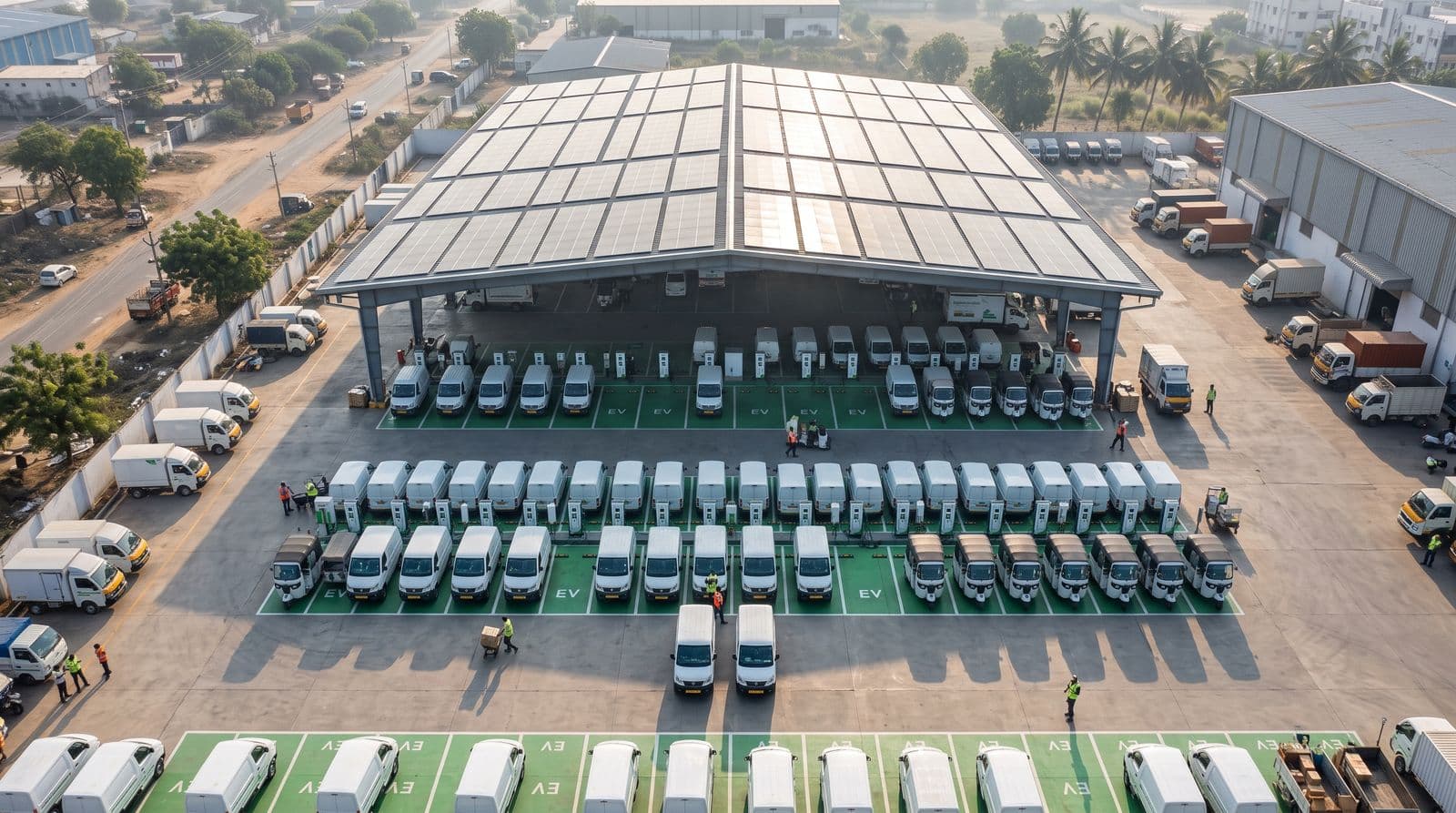
Fleet Electrification in India: A Practical Guide for Businesses
How Indian businesses can electrify delivery, cab and corporate fleets: duty-cycle analysis, depot charging design, load management, software and policy.
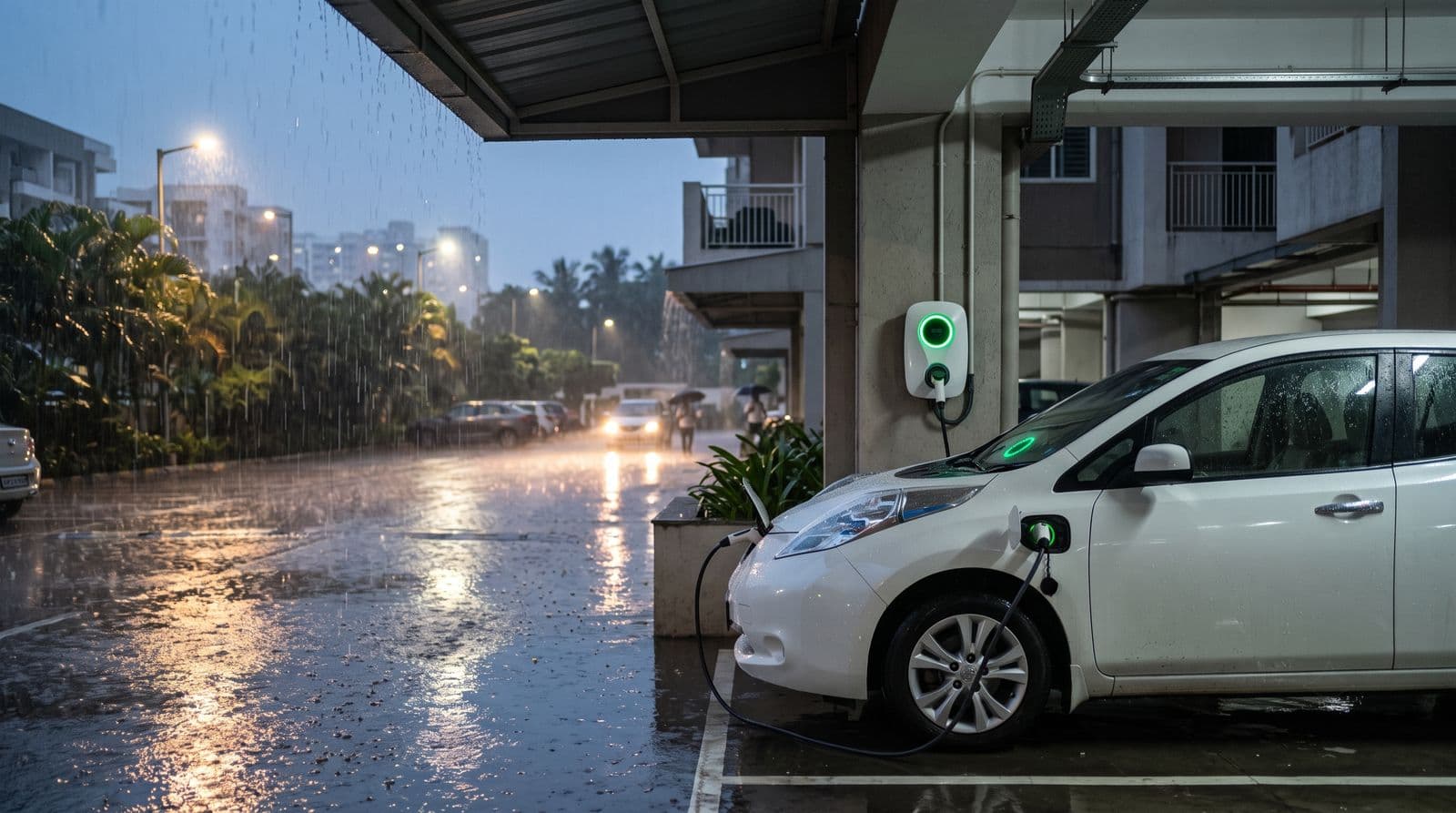
Monsoon EV Charging Safety: Practical Tips for Indian Rains
Is it safe to charge an EV in the rain? How chargers and cars protect you, what to avoid during monsoon, and how to care for home chargers and batteries.
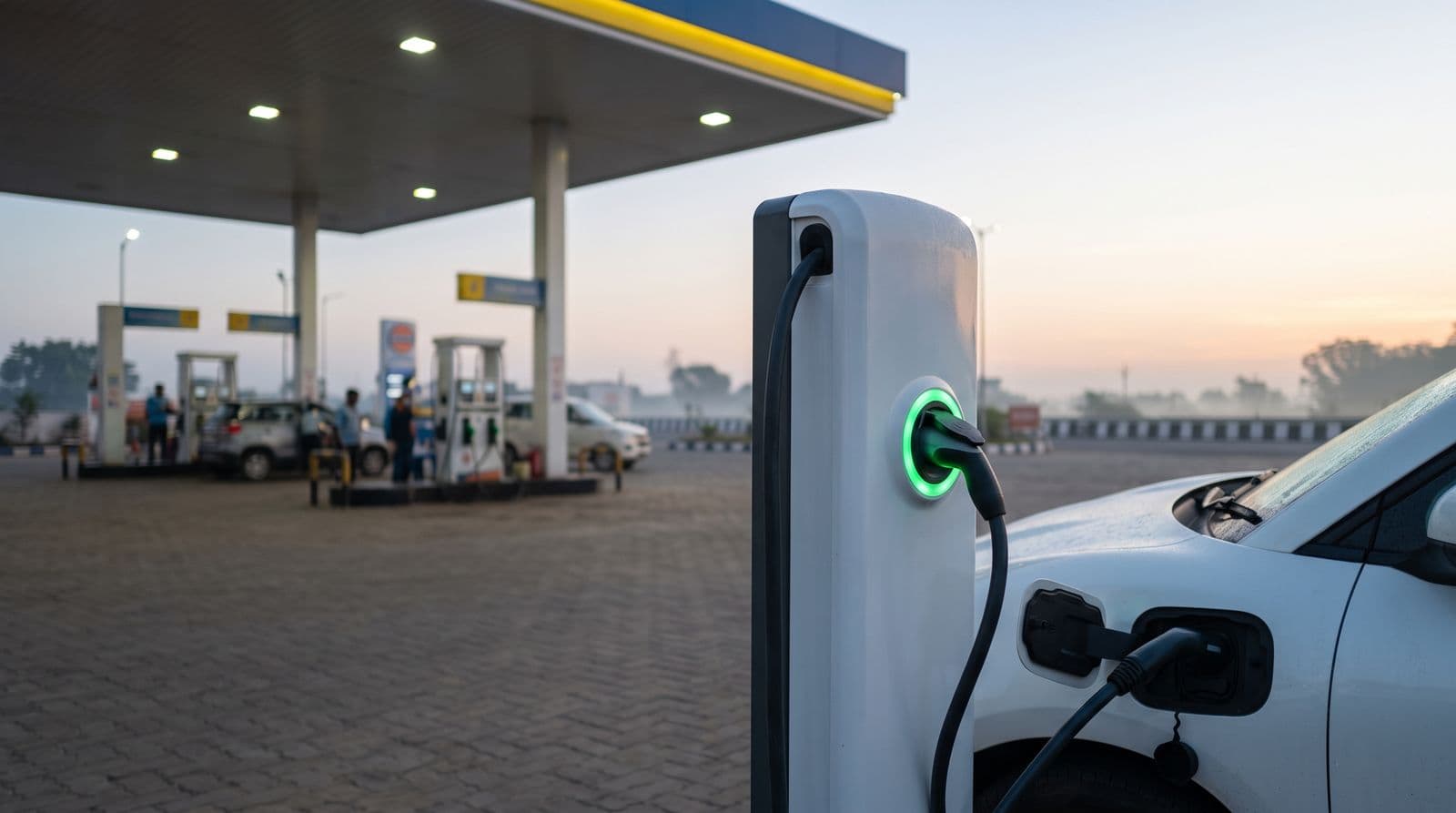
EV vs Petrol: What Does It Really Cost to Run an Electric Car in India?
A transparent per-kilometre comparison of electric and petrol cars in India, covering home charging, public fast charging, GST and maintenance.
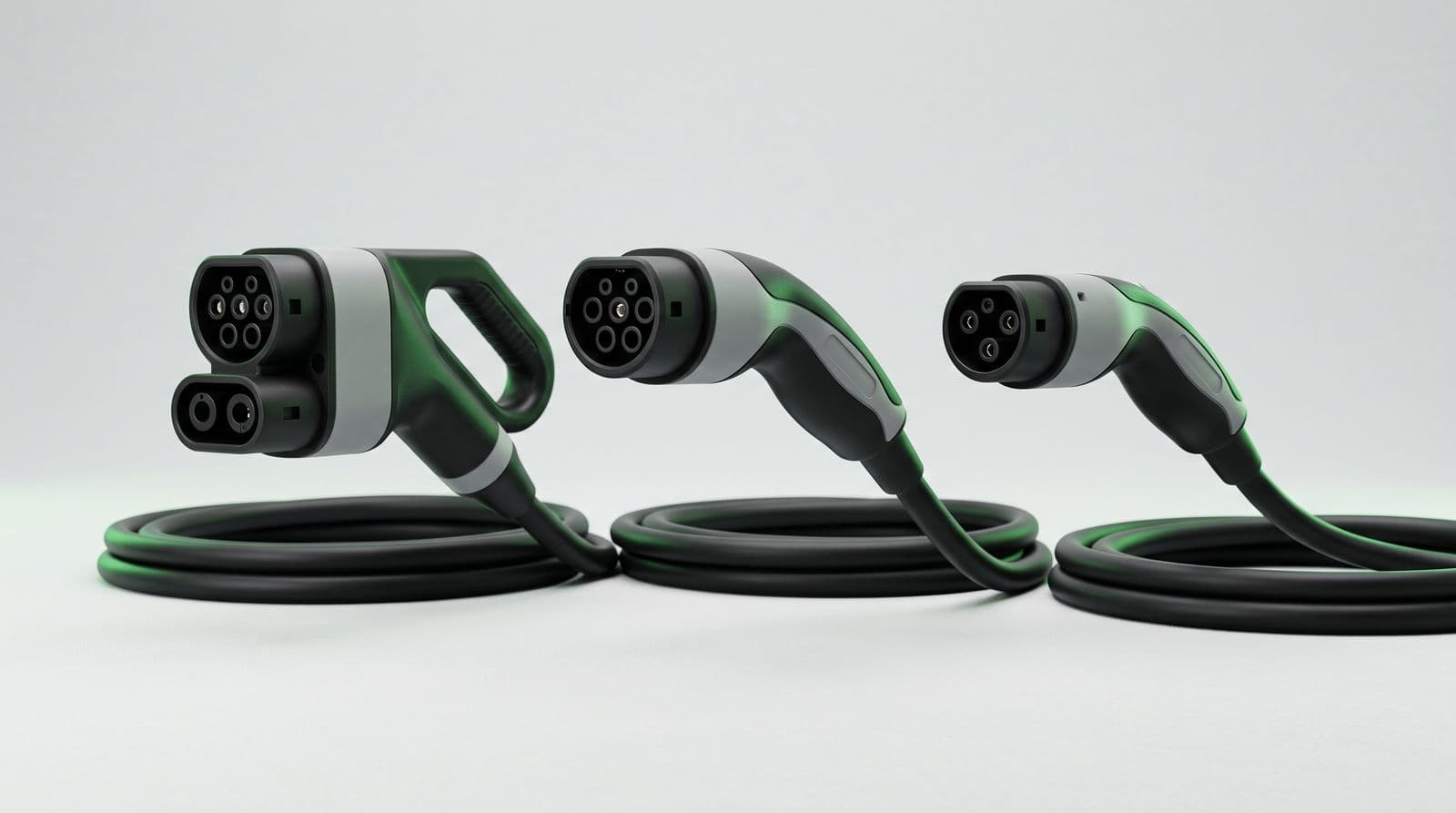
EV Charging Connectors in India Explained: CCS2, Type 2, GB/T, Bharat and LECCS
A clear guide to the EV charging connectors used in India - CCS2, Type 2, Bharat AC-001 and DC-001, GB/T, CHAdeMO and the LECCS standard for two-wheelers.
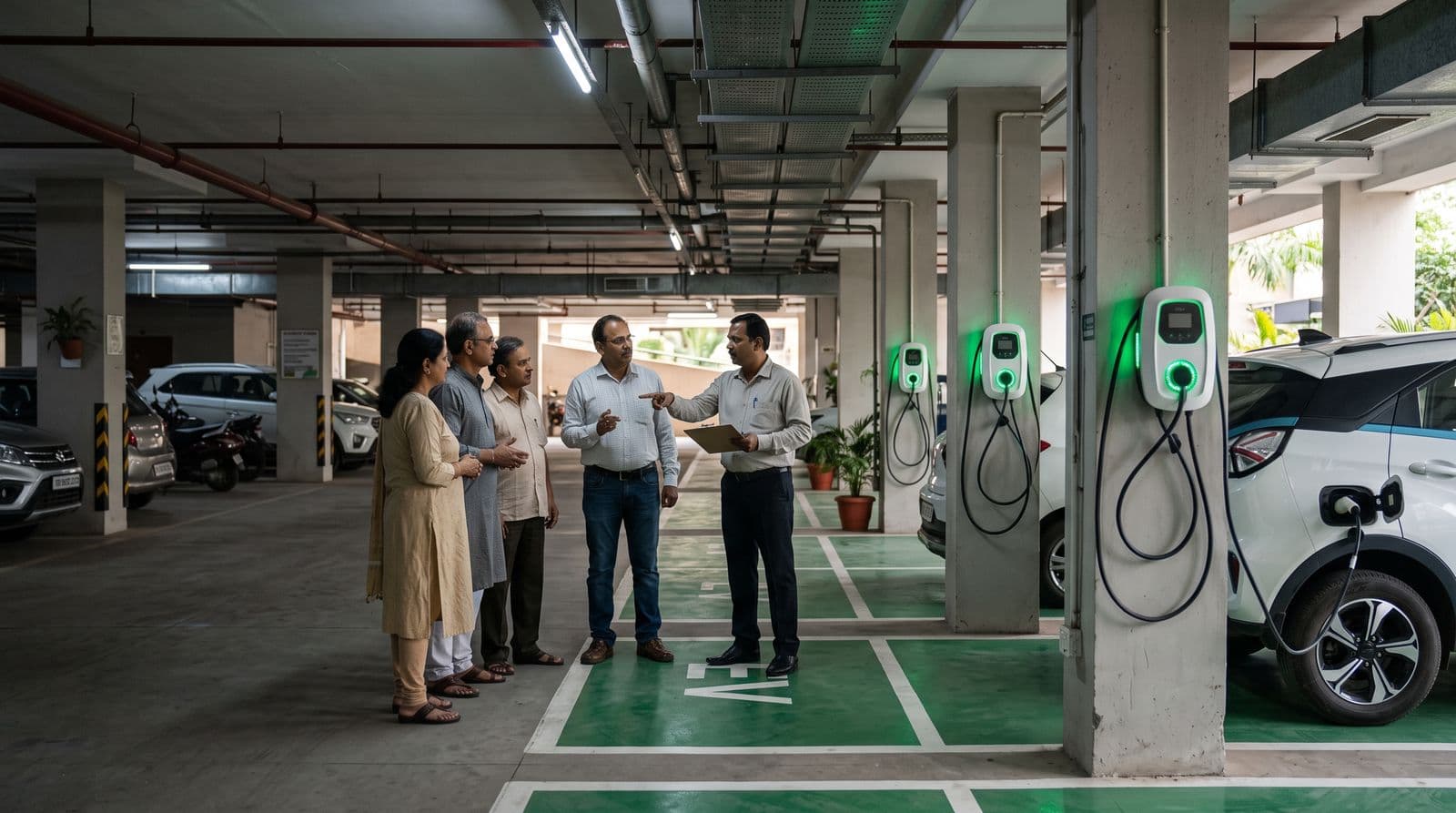
EV Charging in Housing Societies: How to Get RWA Approval in India
What the rules say about EV charging in apartments, how to approach your RWA, billing models that work, and the 20% parking provision for new buildings.
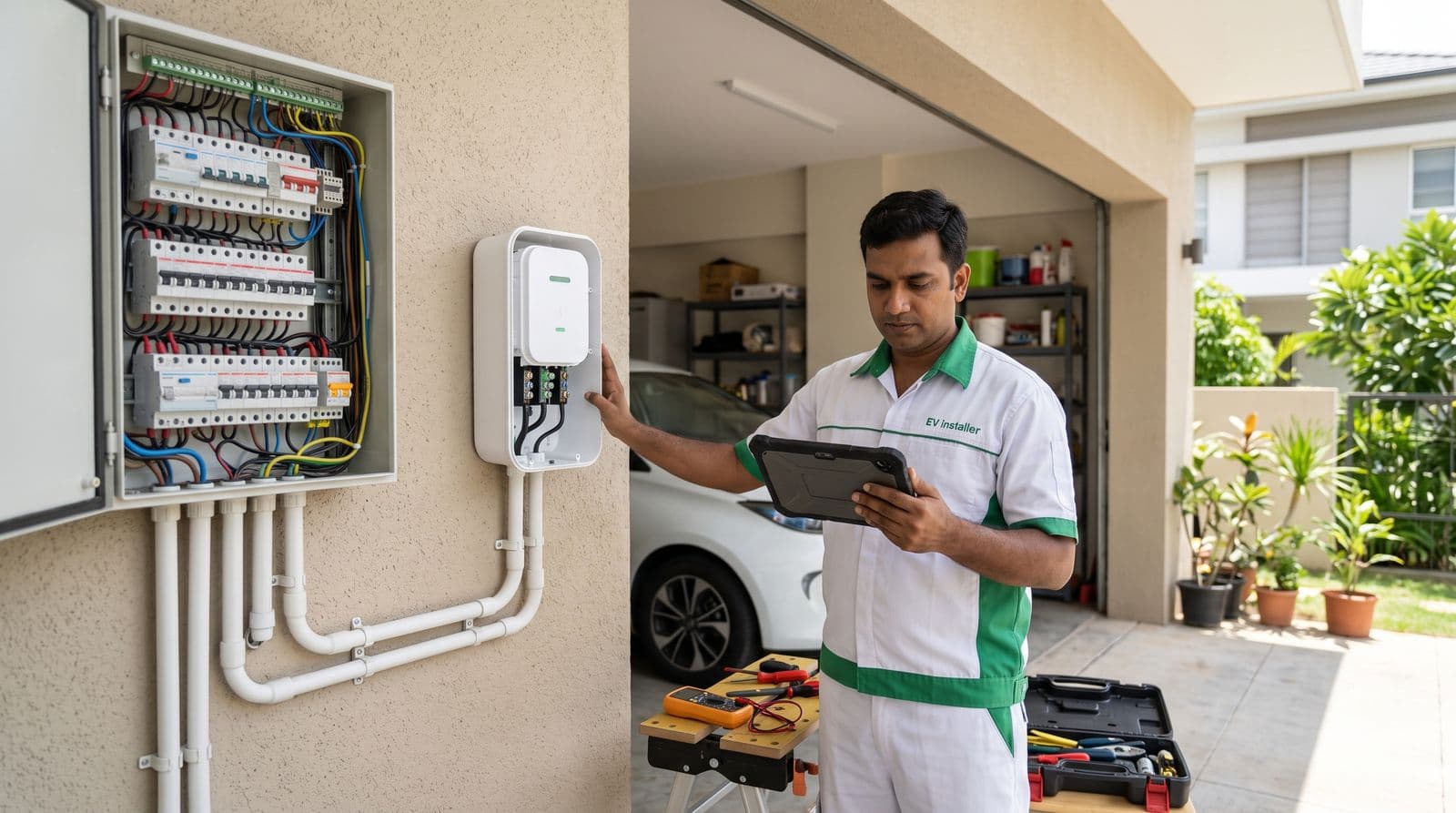
Home EV Charger Installation in India: A Step-by-Step Guide
Sanctioned load, earthing, MCB and RCCB, separate EV meters and DISCOM approvals: a practical guide to installing a home EV charger safely in India.
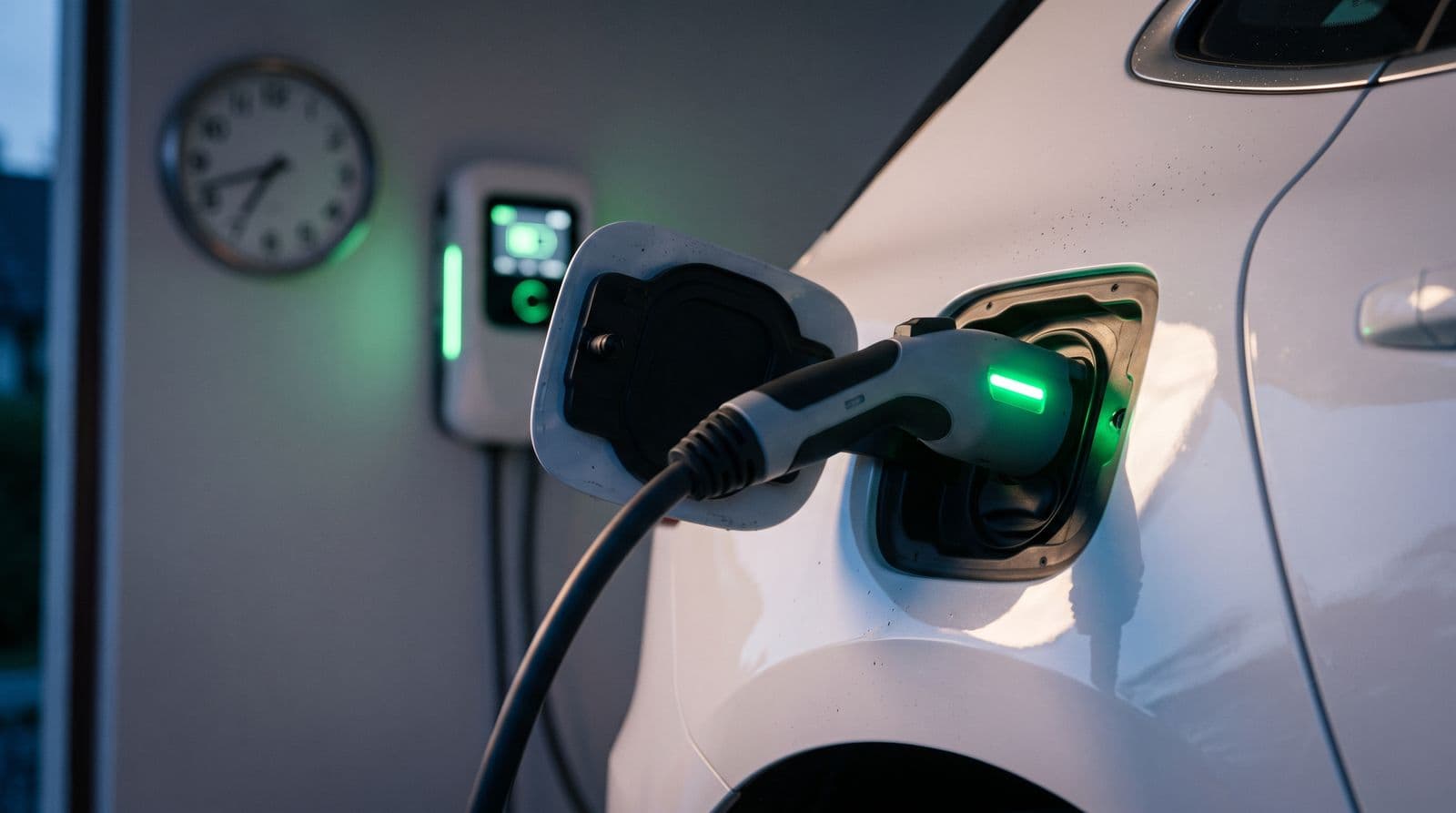
How Long Does It Take to Charge an EV in India? Model-by-Model Guide
Charge times for popular Indian EVs like the Nexon EV, Creta Electric, Windsor and BE 6 on home AC and public DC chargers, plus what slows charging down.
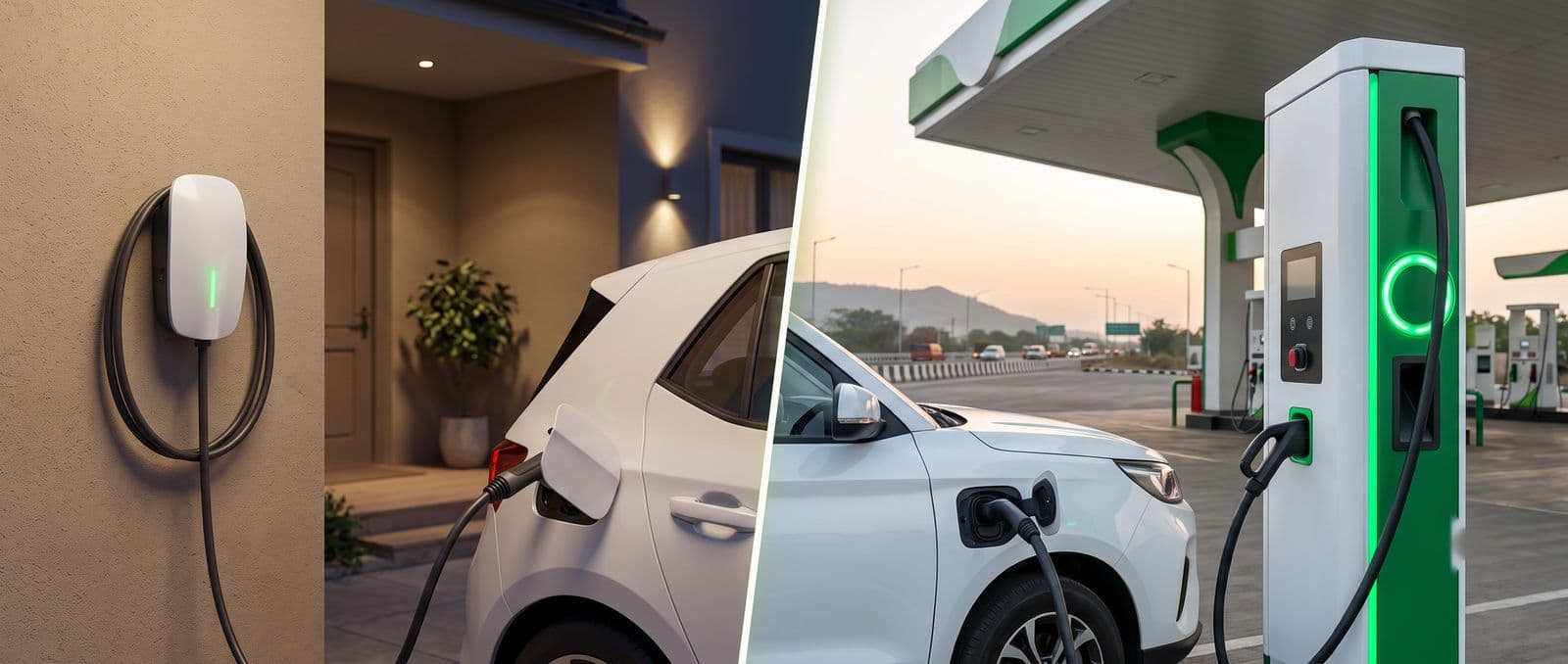
AC vs DC Charging Explained: What Every Indian EV Owner Should Know
AC or DC? Learn how the two charging types differ, typical power levels in India, real charge times, costs, and which one suits your daily routine.
Still have a question?
Our team is happy to help with your specific vehicle, property or project.