Every battery in an electric vehicle stores energy as direct current (DC). The power grid that reaches your home, office or a public charging plaza supplies alternating current (AC). Somewhere between the socket and the battery, AC has to be converted into DC. Where that conversion happens is the single biggest difference between AC charging and DC fast charging, and it explains almost everything else: speed, cost, hardware size and where each type makes sense.
AC charging: the converter is inside your car
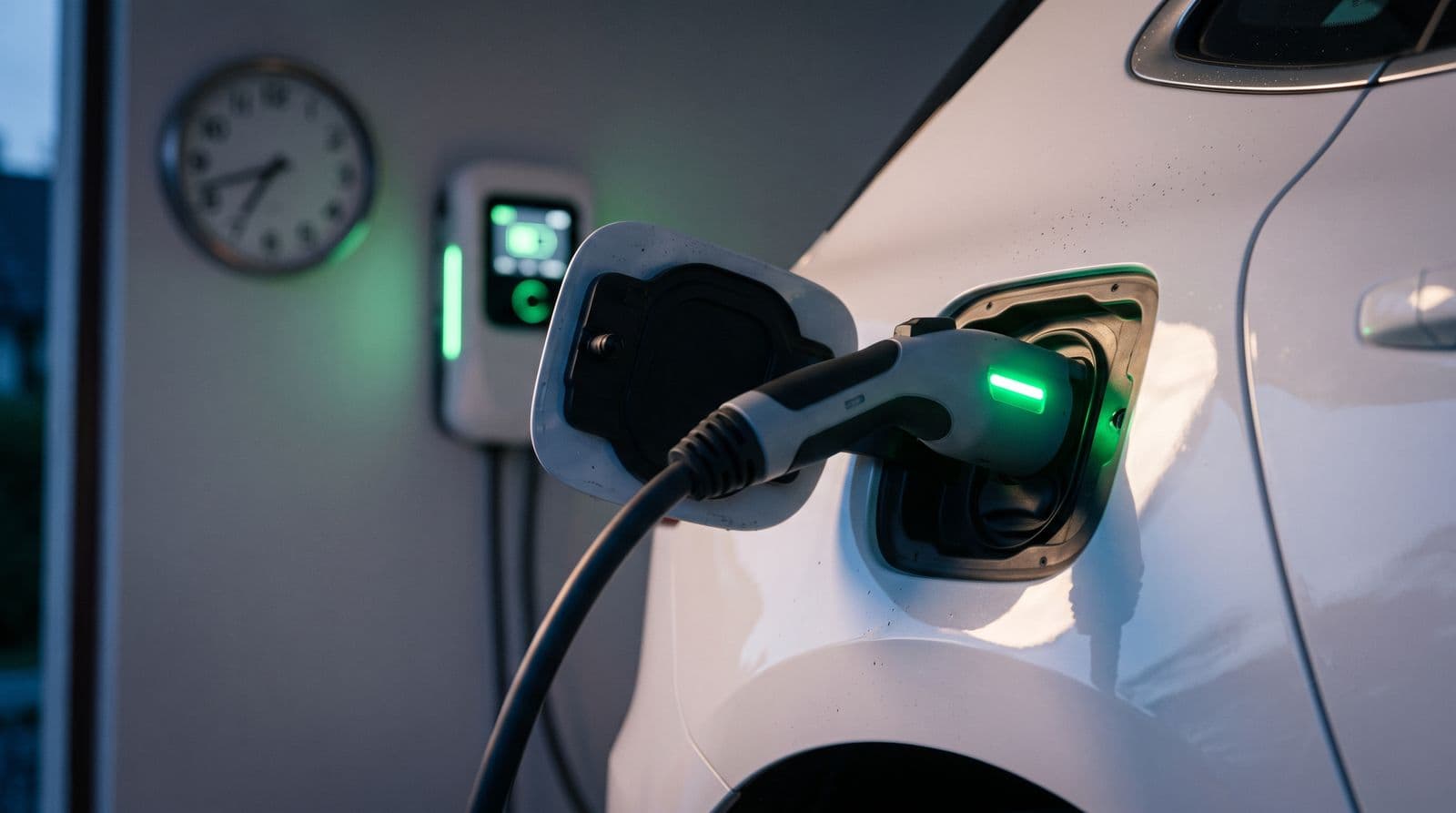
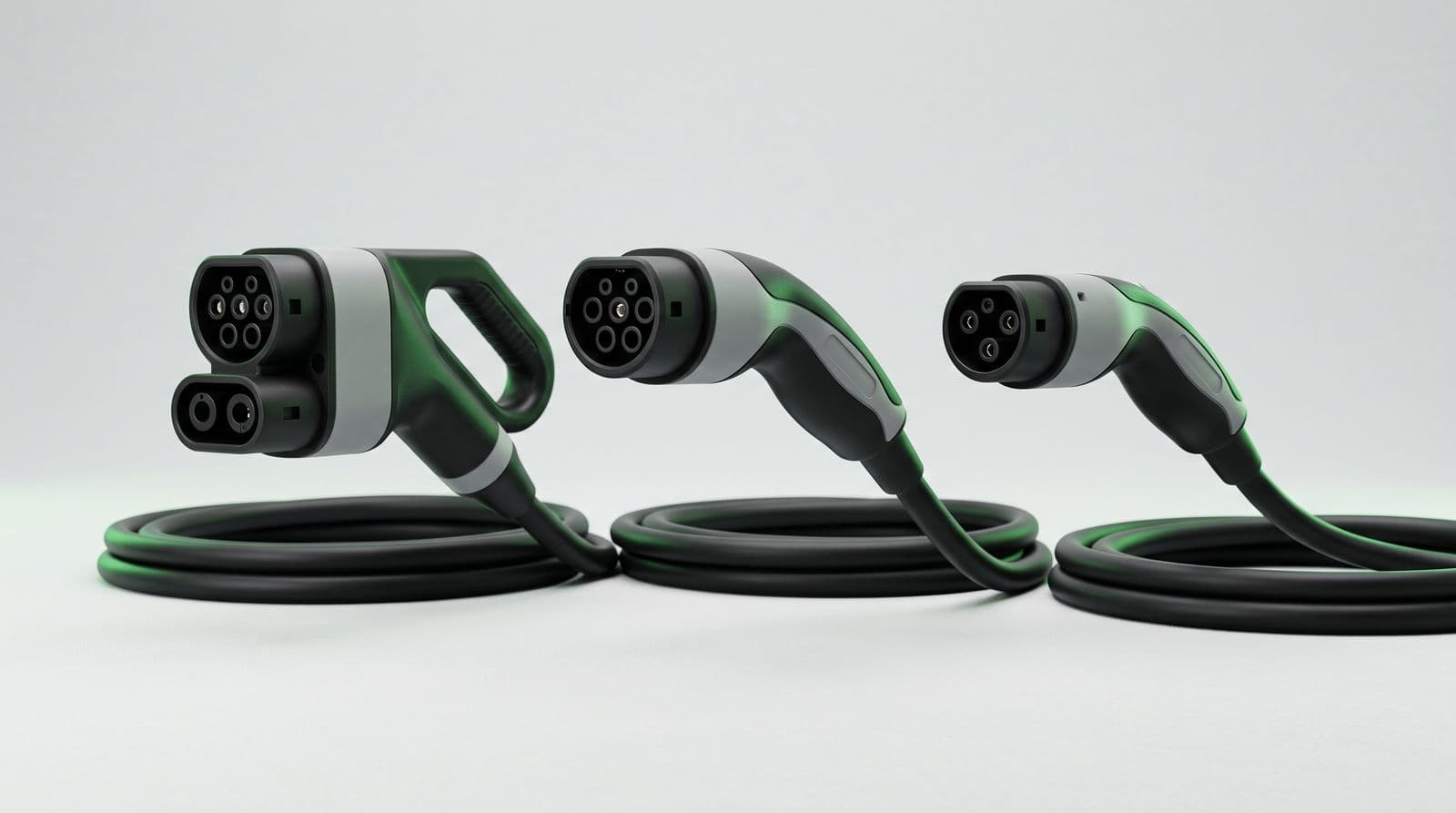
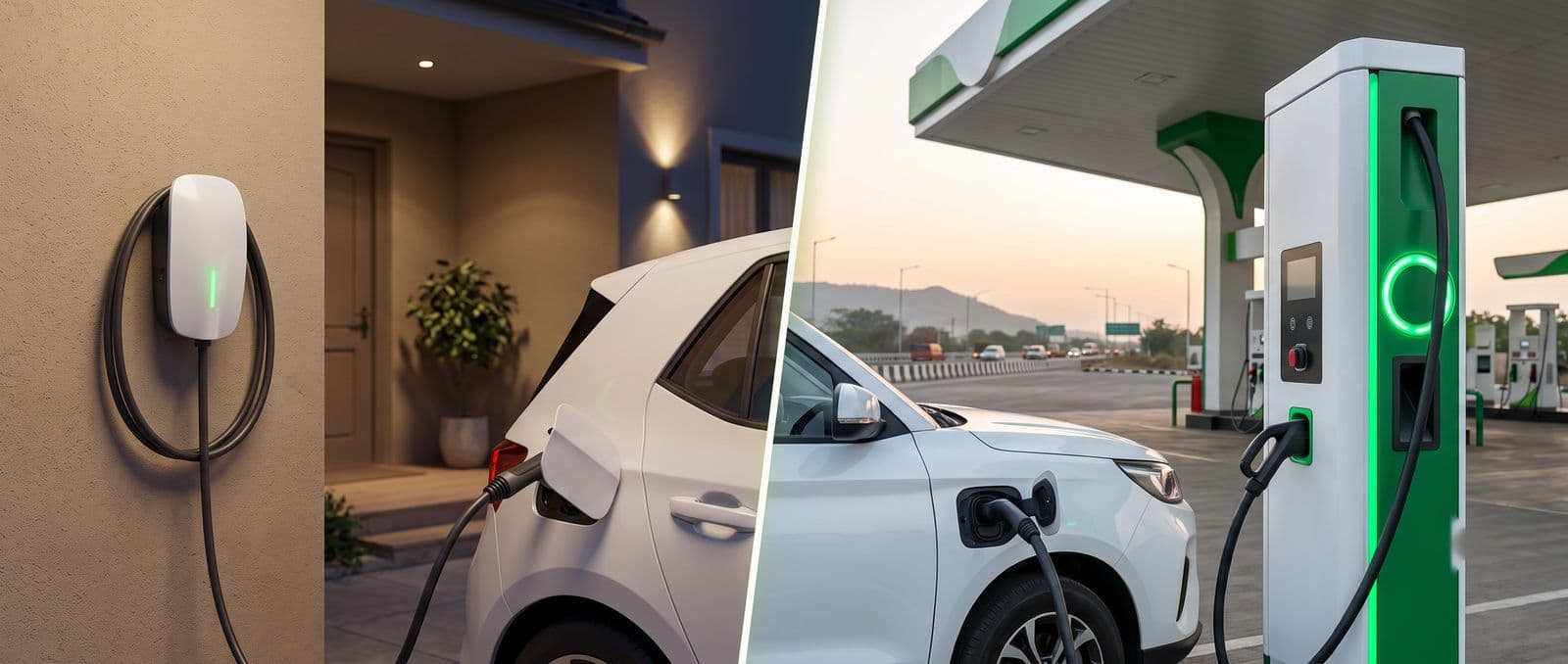
With AC charging, the charger on the wall (technically called EVSE, or electric vehicle supply equipment) passes AC power to the car through a connector, most commonly a Type 2 plug on Indian cars. The car's own onboard charger then converts it to DC for the battery. Because that onboard charger has to fit inside the vehicle, it is limited in size and power.
In India, most electric cars accept between 3.3 kW and 11 kW on AC. A 3.3 kW portable charger works off a 15 A socket; a wall-mounted 7.2 kW or 7.4 kW unit needs a dedicated single-phase circuit; 11 kW AC charging needs a three-phase supply and a car whose onboard charger supports it, such as some variants of the Hyundai Creta Electric.
- 3.3 kW (portable / 15 A socket): adds roughly 15-25 km of range per hour in a typical compact SUV.
- 7.2-7.4 kW (single-phase wallbox): roughly double that, the sweet spot for most homes.
- 11 kW (three-phase wallbox): faster overnight charging for cars with an 11 kW onboard charger.
- Two- and three-wheelers often charge on lower-power AC or on dedicated light-EV connectors.
DC fast charging: the converter is inside the station
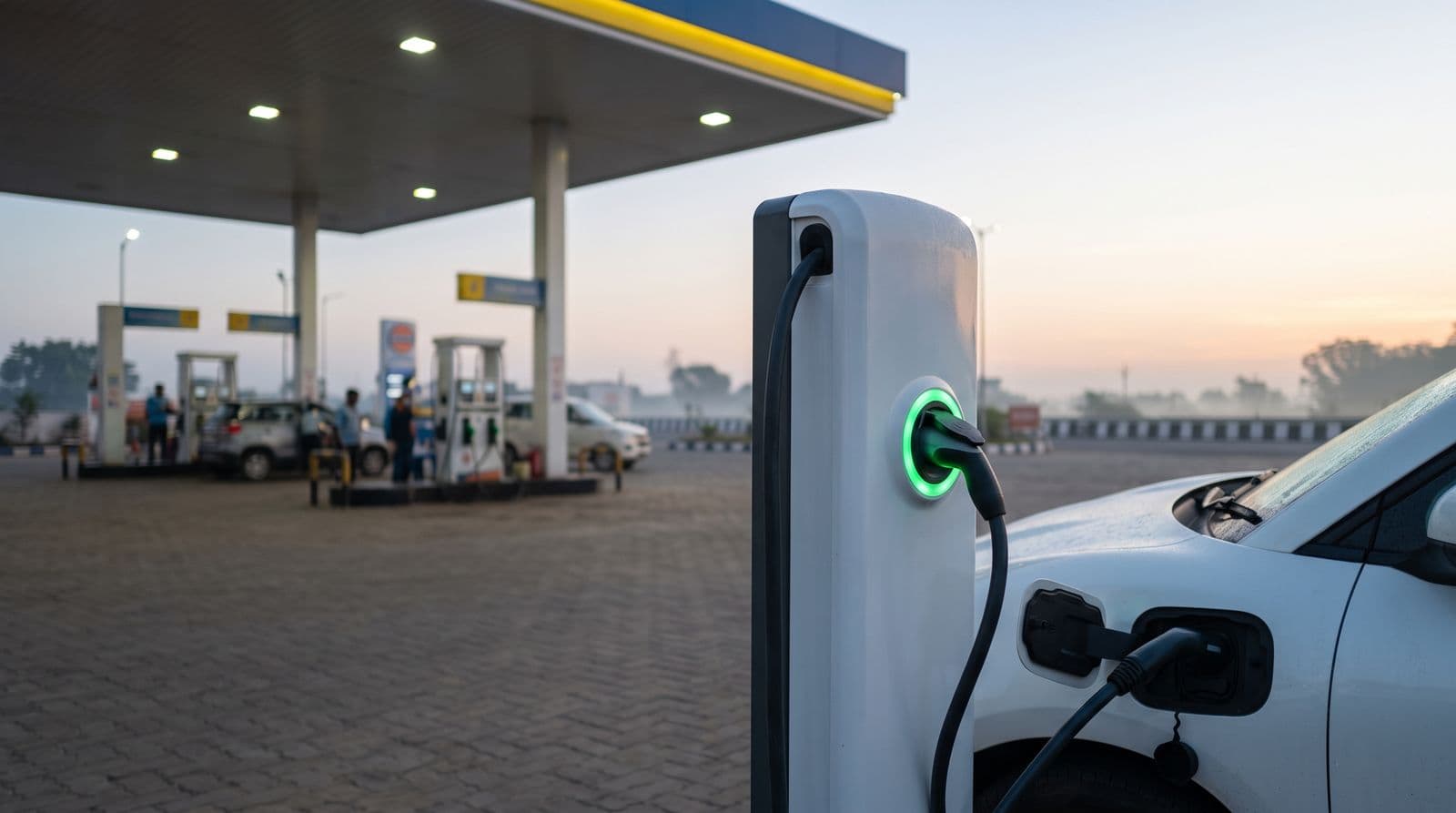
A DC fast charger contains large power electronics that convert AC to DC before the energy enters the car. It bypasses the onboard charger and talks directly to the vehicle's battery management system, which decides how much current it can safely accept. Indian public DC chargers commonly range from around 25-30 kW to 60 kW, with 120 kW and faster units increasingly appearing along highways and at large hubs. Cars use the CCS2 connector for DC charging.
The headline speed of a DC charger is a maximum, not a promise. The car's own peak acceptance rate, the battery temperature and the state of charge all affect what you actually get. That is why manufacturers quote DC times for 10-80% or 20-80%: above roughly 80%, charging slows deliberately to protect the cells.
Real-world examples
- Hyundai Creta Electric (51.4 kWh): about 4 hours 50 minutes for 10-100% on 11 kW AC, and about 58 minutes for 10-80% on a 50 kW DC charger, per published specifications.
- MG Windsor EV (38 kWh): about 6.5 hours for a full charge on the optional 7.4 kW AC charger, according to Autocar India.
- Mahindra BE 6 (79 kWh): around 20 minutes for 20-80% on a DC charger of roughly 175 kW, as quoted by the maker.
What about cost?
AC charging at home is usually the cheapest energy you can buy for an EV because you pay your DISCOM's residential or EV tariff. Public charging adds a service charge on top of the electricity cost, and DC fast charging attracts a higher service charge because the hardware is far more expensive. The Ministry of Power's 2024 guidelines for EV charging infrastructure set ceilings on service charges at public stations that receive government support, with lower caps for AC than for DC and lower caps during solar hours. Charging services also attract 18% GST, which appears on your invoice.
Tip: Treat DC fast charging like a fuel stop on a road trip and AC charging like charging your phone overnight. Most owners do the bulk of their charging on AC and use DC only when time matters.
Is frequent DC fast charging bad for the battery?
Modern EVs manage DC charging carefully, with thermal management systems and charge curves designed to protect the battery. Occasional or even regular fast charging is within design limits for most cars. That said, heat is the enemy of lithium-ion cells, and repeated very high-power sessions in peak Indian summer can add some stress. If your routine allows it, a mix of overnight AC charging and DC charging when needed is the gentlest pattern. Always follow the charging advice in your owner's manual.
Which one do you need?
- If you have a parking spot at home, start with an AC wallbox sized to your car’s onboard charger. Amphive’s home EV charger installation service starts with a site assessment so the charger suits your car and your electrical supply.
- If you drive long distances regularly, plan around DC fast chargers on your routes and keep home charging for daily top-ups.
- If you cannot install a home charger, combine workplace or community AC charging with occasional DC sessions.
AC is about convenience, DC is about time. Most EV owners in India need a little of both.
Understanding the difference helps you set realistic expectations, pick the right hardware and avoid paying fast-charging prices for energy you could have added while you slept.
Frequently asked questions
Most modern EVs are designed to handle regular DC fast charging, but overnight AC charging is gentler and cheaper. Follow your manufacturer's guidance, especially in very hot weather.
The car's battery management system limits current based on its maximum acceptance rate, battery temperature and state of charge. Charging also tapers above roughly 80%.
Only if your car's onboard charger supports 11 kW and you have a three-phase supply. Otherwise the car will draw only what its onboard charger allows.
Sources
- Ministry of Power EV charging guidelines 2024 (Mercom India summary)
- Hyundai Creta Electric specifications (CarDekho)
- MG Windsor EV range and charging (Autocar India)
- Mahindra BE 6 (Wikipedia)
Policies and tariffs change. Information is accurate to the best of our knowledge as of the publication date.