India's EV charging rules are shaped by several layers of policy: central guidelines from the Ministry of Power, central subsidy schemes from the Ministry of Heavy Industries, state EV policies, regulatory tariff orders from state electricity commissions, building bye-laws and tax rules. This guide summarises the most important pieces as of 2026. Policies change, so always check the latest official notification before making decisions.
Ministry of Power guidelines (2024)
In September 2024, the Ministry of Power issued revised Guidelines for Installation and Operation of Electric Vehicle Charging Infrastructure, superseding earlier versions issued between 2018 and 2023. The Bureau of Energy Efficiency is the central nodal agency. Key provisions reported include:
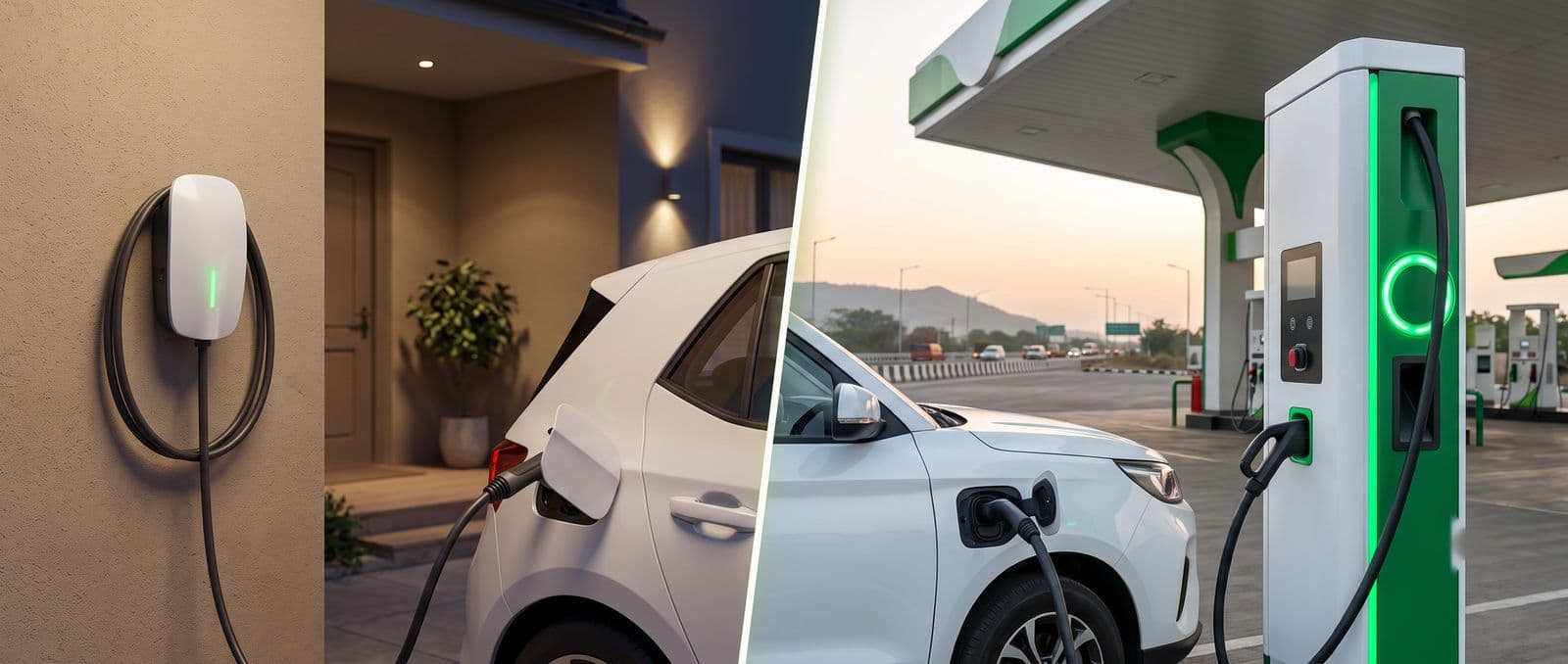
- Density targets: at least one charging station in every 1 km x 1 km grid in urban areas by 2030, as notified by states, and charging stations every 20 km on both sides of highways, expressways and major roads, with fast charging for long-range and heavy-duty EVs every 100 km.
- Electricity tariff: tariffs for public charging stations are not to exceed the average cost of supply for a transition period, with lower rates during solar hours and higher rates at other times.
- Service charge ceilings: for stations set up with government support or on government land, reported caps (excluding GST and land cost) of ₹3 per kWh in solar hours and ₹4 per kWh otherwise for AC, and ₹11 and ₹13 per kWh respectively for DC.
- Land on revenue share: government and public entities can provide land for public charging stations on a revenue-sharing basis, with a reported ₹1 per kWh paid to the land-owning agency quarterly.
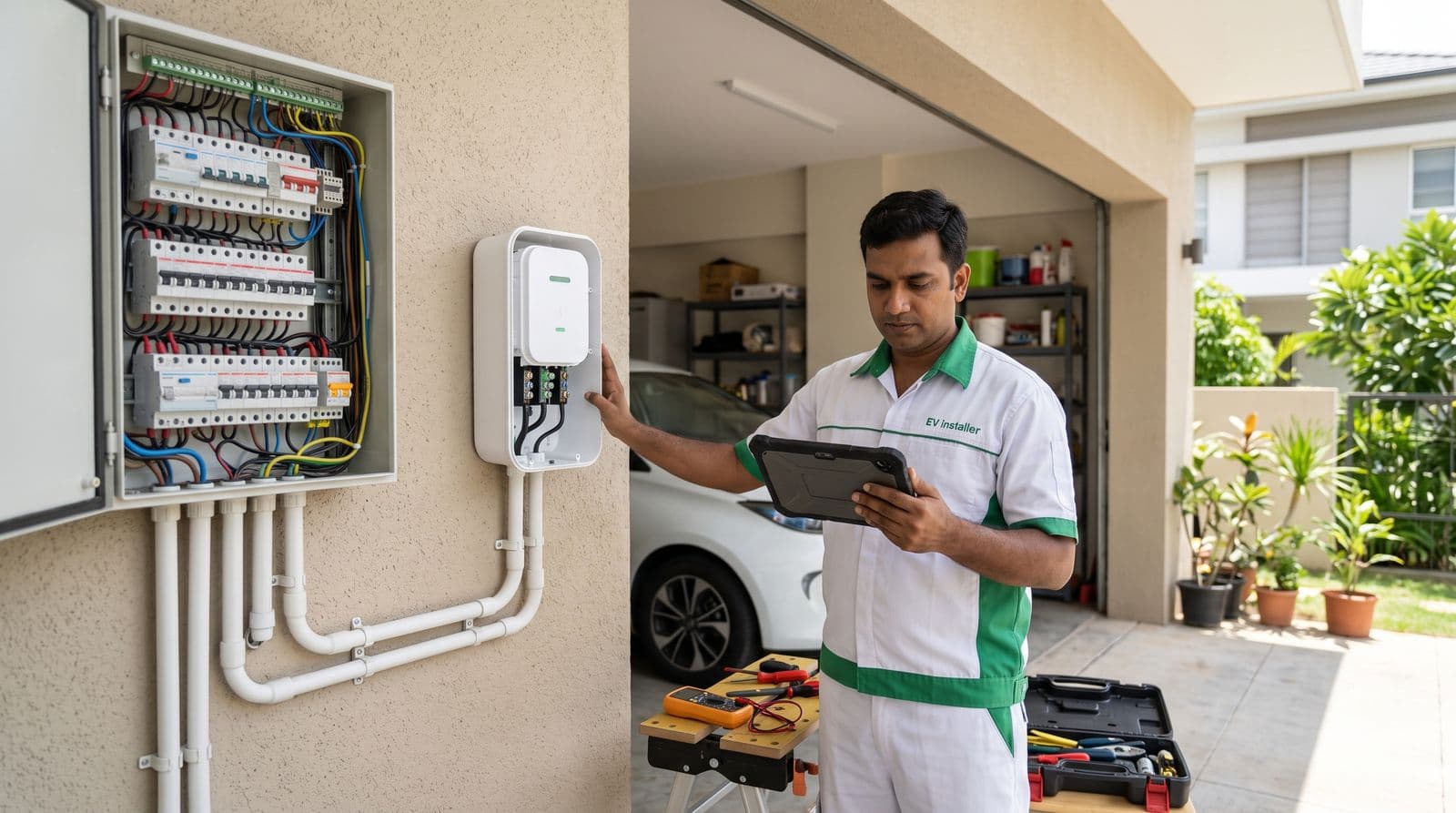
- Connections: separate metering for EV charging, sub-metering behind existing HT connections, and the option of a separate EV connection for residences, RWAs and housing societies.
- E-bus depots: minimum charging capacity of 240 kW per depot charger installation, as reported.
PM E-DRIVE scheme
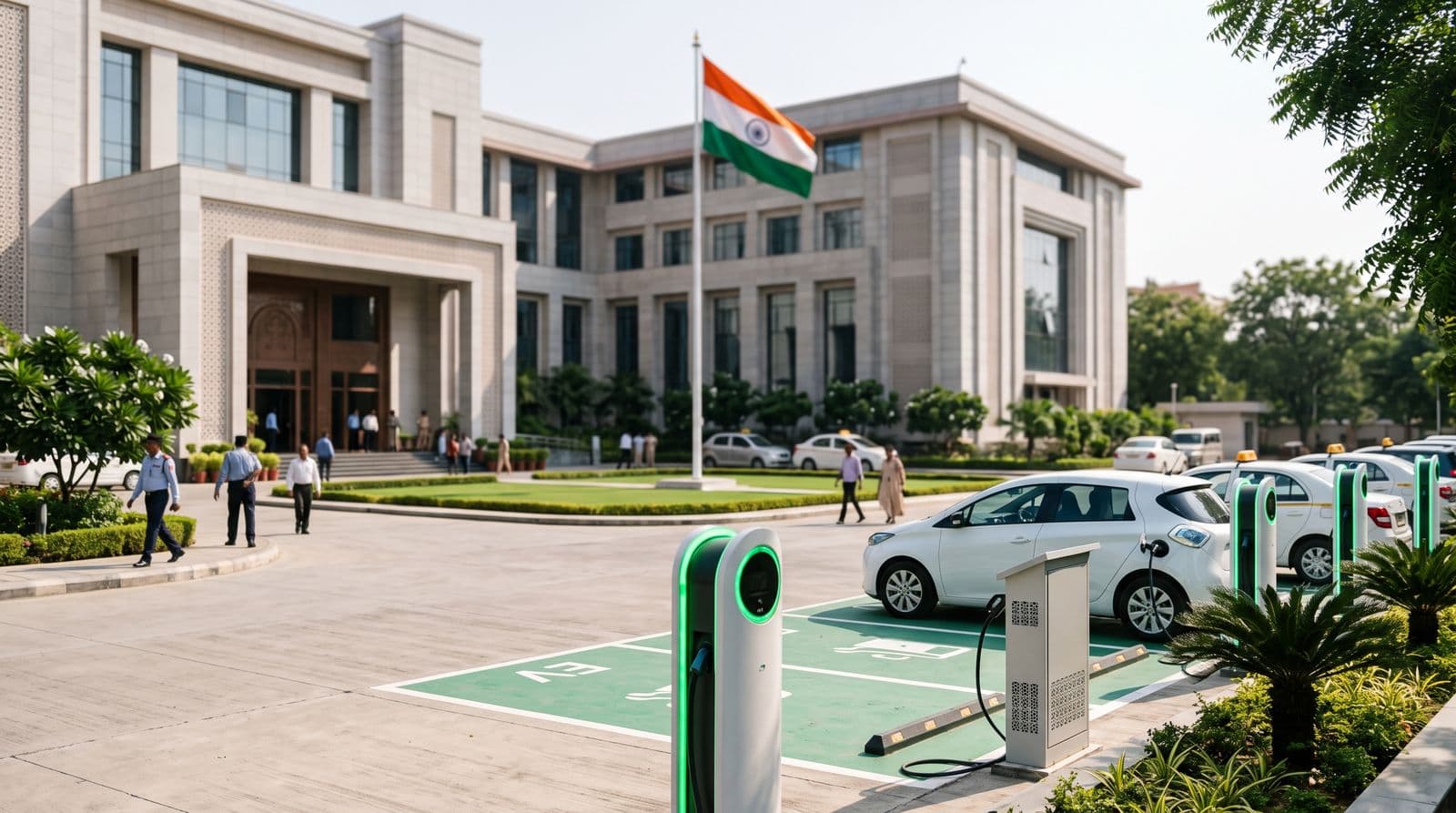
PM Electric Drive Revolution in Innovative Vehicle Enhancement (PM E-DRIVE) was notified by the Ministry of Heavy Industries in 2024 with a total outlay of ₹10,900 crore. Of this, ₹2,000 crore is earmarked for public EV charging infrastructure in cities with high EV penetration and along selected highways. Published scheme summaries cite plans for about 22,100 fast chargers for electric four-wheelers, 1,800 for e-buses and 48,400 for two- and three-wheelers. The scheme has been reported as extended to March 2028.
Deployment has been slower than planned. Replies in Parliament during 2026, as reported in the media, indicated that several thousand chargers had been sanctioned but deployment was still at an early stage.
Tip: Scheme funding for charging generally flows through government agencies and public sector undertakings, often via tenders. Private operators typically participate as bidders or partners rather than claiming subsidies directly.
Tamil Nadu EV Policy 2023
Tamil Nadu’s Electric Vehicles Policy 2023 supports charging infrastructure in the state, requires charging stations to follow the Ministry of Power guidelines, and identifies Chennai, Coimbatore, Tiruchirappalli, Madurai, Salem and Tirunelveli as focus cities for e-mobility. Its capital incentives are aimed mainly at public charging stations. Residential supply in the state comes from TNPDCL, the distribution company formed from the restructuring of TANGEDCO.
Maharashtra EV Policy 2025
Maharashtra’s Electric Vehicle Policy 2025, issued in May 2025 and valid until March 2030, targets wider EV adoption and promotes EV-ready parking: charging-ready parking in new residential buildings, community chargers in new housing societies, and a route for existing societies to approve shared charging spaces. Reports differ on how some provisions will be enforced, so check the latest government resolution for specifics.
Electricity tariffs for EV charging
State electricity regulatory commissions set EV tariffs. Tamil Nadu (TNERC) and Maharashtra (MERC) both have EV charging tariff categories, and the 2024 central guidelines cap EV charging tariffs with reference to the average cost of supply. Tariffs change with each regulatory order, so check your distribution company’s current tariff before relying on a figure.
GST
- Electric vehicles: 5% GST, retained under the 2025 GST rate rationalisation.
- EV chargers: 5% GST.
- EV charging services: 18% GST. Industry bodies have sought a reduction, but as of 2025-26 the rate remained 18%.
Building bye-laws
The Ministry of Housing and Urban Affairs amended the Model Building Bye-Laws 2016 in 2019 to provide EV charging for 20% of parking capacity in new buildings, with adoption and exact percentages varying by state.
What this means for drivers and businesses
- Drivers can expect more public chargers, especially in cities and on highways, though rollout is uneven.
- Housing societies have a clear path to separate EV connections and transparent billing.
- Businesses and landowners can explore hosting chargers, including on revenue-share models.
For homeowners, the most relevant provision is the option to charge on an existing connection or request a separate EV connection. For apartment communities, fleets and businesses, the guidelines on separate connections, metering and tariffs are a useful starting point when planning charging. Amphive can help you assess your site against these options in South India and Mumbai.
Policy sets the direction; good execution on the ground decides how fast India gets there.
Frequently asked questions
They are revised central guidelines, issued in September 2024, covering charging station density targets, electricity tariffs, service charge ceilings for supported stations, land on revenue share, and connection and safety requirements.
Of the scheme's ₹10,900 crore outlay, ₹2,000 crore is earmarked for public EV charging infrastructure, according to official summaries reported in the media.
The incentives in both states focus mainly on vehicles and public charging infrastructure rather than home chargers. Check the latest state notifications before planning around a subsidy.
Sources
- Ministry of Power EV charging guidelines 2024 (Mercom India)
- Ministry of Power guidelines 2024 (Powerline)
- PM E-DRIVE explained (Swarajya)
- PM E-DRIVE chargers approved, deployment pending (electrive)
- GST on EV charging (pv magazine India)
- DERC EV tariff (Mercom India)
- Tamil Nadu EV Policy 2023 – summary (EVreporter)
- Maharashtra EV Policy 2025 – summary (EVreporter)
Policies and tariffs change. Information is accurate to the best of our knowledge as of the publication date.