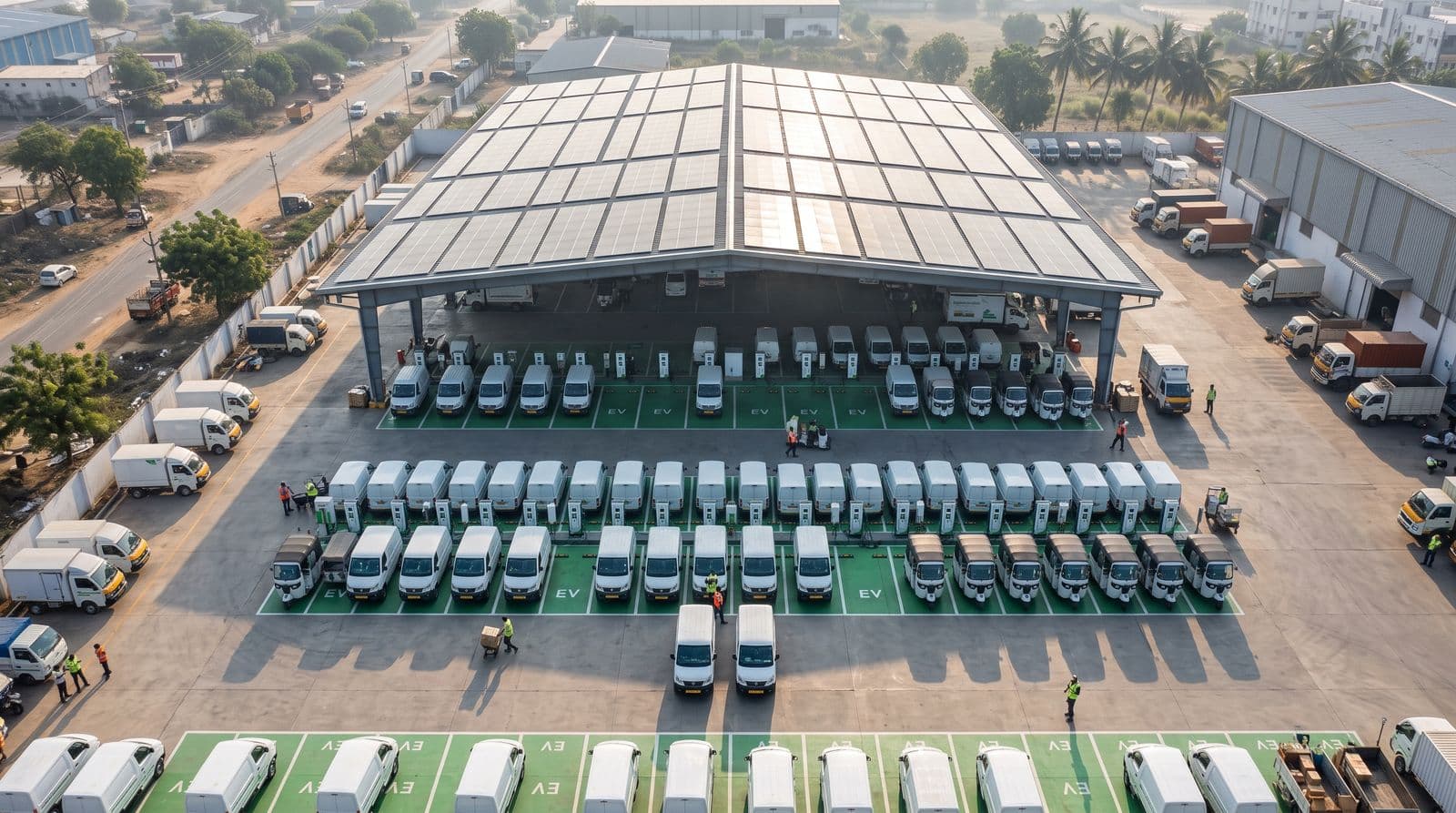
Fleets were among the first to go electric in India, and for good reason. Commercial vehicles run many more kilometres than private cars, so lower running costs add up quickly. State policies such as Maharashtra’s EV Policy 2025 and Tamil Nadu’s EV Policy 2023 add further momentum. Whether you run last-mile delivery, ride-hailing, employee transport or corporate cars, the path to a successful transition looks similar.
1. Start with duty cycles, not vehicles
Before choosing vehicles, study how your fleet actually operates. For each route or vehicle type, document daily kilometres, the longest single run, time spent parked and where, payload, and shift patterns. Telematics data from your existing fleet is ideal. Duty-cycle analysis tells you which vehicles can switch first, what battery size you need and how much charging time is available.
Tip: Begin with the routes that are most predictable and return to base daily. They are the easiest to electrify and generate the data you need for the next phase.
2. Choose the right charging mix
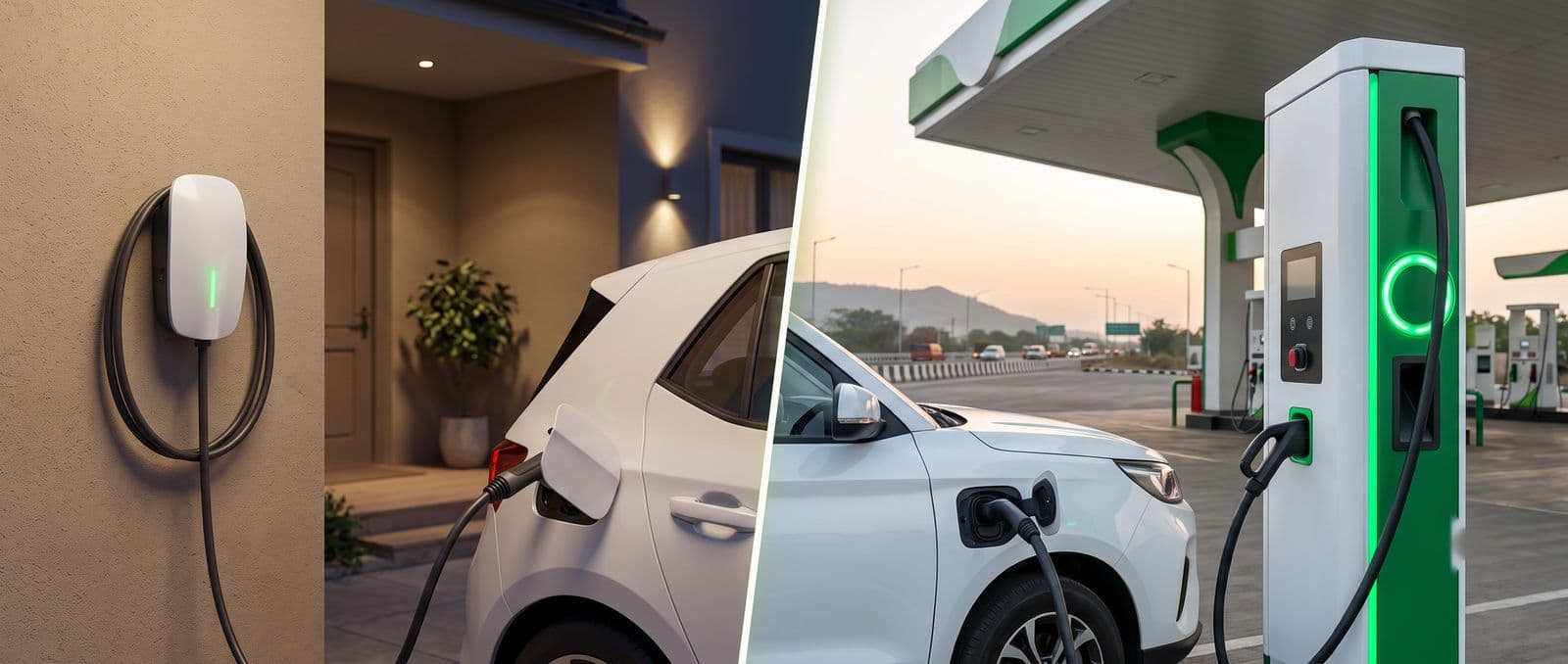
- Depot AC charging: lowest cost per kWh and per charger, ideal for vehicles parked overnight.
- Depot DC fast charging: for vehicles that need quick turnarounds between shifts.
- Opportunity charging: top-ups at customer sites, workplaces or public hubs during the day.
- Public networks: a backup for unplanned routes and long-distance trips.
Most fleets end up with a mix: plenty of AC points for overnight charging and a smaller number of DC chargers for flexibility. Oversizing DC capacity is a common and expensive mistake.
3. Plan the electrical connection early
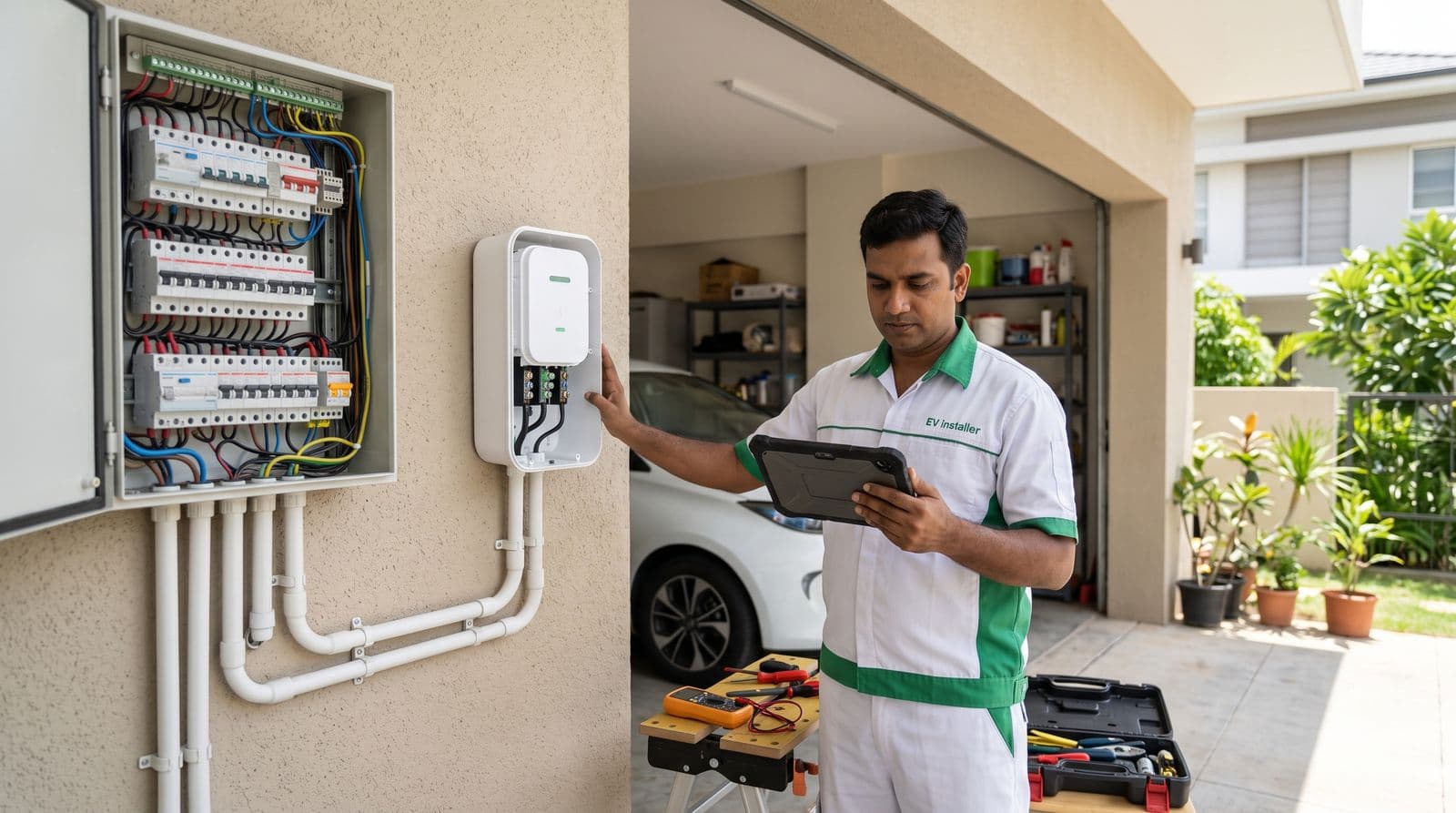
Power availability is often the longest lead-time item. Depending on scale, a depot may need a load enhancement, a new LT connection or an HT connection with its own transformer. The Ministry of Power's 2024 guidelines for EV charging infrastructure require separate metering for EV charging, allow sub-metering behind an existing HT connection, and allow eligible consumers to seek open access for charging stations. They also prescribe minimum charging capacity at e-bus depots. Engage your DISCOM early.
4. Use load management and time-of-day pricing
Smart charging software can stagger sessions, prioritise vehicles leaving first and keep the depot within its contracted demand. Where your DISCOM offers time-of-day tariffs, scheduling charging into cheaper periods can make a meaningful difference. The Ministry of Power guidelines encourage lower tariffs during solar hours, which can suit fleets that return mid-day.
5. Insist on open, interoperable hardware
Choose chargers that support OCPP so you are not locked into a single software provider, and use RFID or app-based authentication so you can track energy use by vehicle and driver. Integrating charging data with telematics gives you true cost per kilometre.
6. Use available policy support
Central and state policies have supported fleet electrification. The PM E-DRIVE scheme, administered by the Ministry of Heavy Industries, supports electric two-wheelers, three-wheelers, trucks, buses and public charging infrastructure, with a total outlay of ₹10,900 crore and reports indicating extension until March 2028. State EV policies, including those of Maharashtra and Tamil Nadu, offer further incentives that vary by vehicle category. Check current eligibility before you budget for them.
7. Prepare your people
- Train drivers on efficient driving, regenerative braking and charging etiquette.
- Train depot staff on charger operation, basic troubleshooting and safety.
- Set clear rules for who charges when and how vehicles are prioritised.
- Track and share results: cost per km, uptime and driver feedback.
Total cost of ownership
Electric commercial vehicles usually cost more upfront but less to run and maintain. The business case depends on daily kilometres, vehicle utilisation, energy cost, financing and residual value. Build a model with your own data rather than relying on generic payback claims, and revisit it as you collect real operating data from your first electric vehicles.
Amphive’s fleet and commercial EV charging solution covers site assessment, electrical-readiness checks, charger planning and installation for fleets and business premises in our service areas.
Fleet electrification succeeds when charging is planned as carefully as routes.
Start small, measure everything and scale what works. Fleets that take a data-driven approach typically find electrification both practical and financially sound.
Frequently asked questions
If vehicles are parked overnight, AC charging is usually the most cost-effective. Add DC chargers only where vehicles need quick turnarounds between shifts.
The Ministry of Power's 2024 guidelines require separate metering for EV charging. Depending on scale, this may be a sub-meter, a new LT connection or an HT connection.
OCPP is an open protocol that lets chargers communicate with management software. It lets you mix hardware brands and change software providers without replacing chargers.
Sources
- Ministry of Power EV charging guidelines 2024 (Mercom India summary)
- PM E-DRIVE scheme extended (Usthadian)
- PM E-DRIVE overview (ICRA)
Policies and tariffs change. Information is accurate to the best of our knowledge as of the publication date.